

It has long been anticipated that the Federal Reserve would be raising the interest rate in the foreseeable future, and last month it finally actualized. Federal Reserve Chairwoman Janet Yellen announced in December that the interest rate would increase from 0-0.25 percent to 0 .25-0.50 percent. While not a large increase, the raise will still impact a great portion of industries across the US. How will the recent increase affect US farmers, landowners, and the agriculture industry?
First, and most obviously, the hike will increase the cost of borrowing money—something with which most farmers are well acquainted. With the current rate increase, producers borrowing money based on prime would pay 0.25 percent more interest annually on their short-term loans, including operating and vehicle loans.
Secondly, the rate increase will add to the downward pressure on the price of farmland.
Lastly, interest rate increases may also contribute to a stronger US dollar. For those in agriculture, this translates to less competitive commodity prices in the world market.
According to Jeffery Dorfman, an agricultural economist at the University of Georgia, one percentage point rise in the interest rate can translate into as much as a 6 percent drop in commodities prices. On the low end, such a move could push prices down by 2 percent, which translates into “a dime or so per bushel for corn and wheat and maybe a quarter for soybeans,” he says.
While that information is sobering, Dorfman is quick to reassure farmers.
“I would not expect the inevitable increase in interest rates to be positive for commodity prices, but the magnitude of the negative impact should be relatively small and fairly evenly spread across the major row crops.”
With all this in mind, it’s important to take into account that more increases are on the horizon. In September of 2015, Yellen said that the rate will likely rise to 1.5 % by late 2016, 2.5 % in late 2017, and 3.5 % in 2018.
The good news is that the very gradual increases will soften the blow for most producers, depending upon their current financial situation.
What is the best course of action for farmers and landowners in response to rising interest rates? It’s best to continually strive to make improvements in efficiency and productivity, both in the fields and financially. Being able to provide detailed cost projections and yield estimates to your lender will put you in a much better position to negotiate better interest rates.
Creighton University economics professor Ernie Goss has his own suggestion.
“If I were a farmer, I would protect myself against rising short-term rates by locking in these very low long-term rates. I would take out equity on the farm, understanding that I may be using the funds for operating,” Goss said.
Do you have concerns about what the interest rate hike will mean for your farming operation? Feel free to contact us with your concerns. We are glad to work with you to keep your operation running strong.
Source consulted: Anderson, Ken. “The Impact of Higher Interest Rates on Agriculture.” Brownfield Ag News. Brownfield Ag News for America. 03 Nov. 2016. Web. 21 Jan. 2016. Howard, Fran. “How a Rise in Interest Rates Could Affect Farmers.” AgWeb.com. Farm Journal. 05 Aug. 2015. Web. 21 Jan. 2016. Rice, Allison. “If Interest Rates Rise, What Happens to Crop Prices?” Agweb.com. Farm Journal. 15 Dec. 2015. 21 Jan. 2016.
 A successful farm used to be judged by good yields, well-maintained fields and machinery, and timely planting and harvesting. With the burgeoning land and commodity values that characterized the first decade of the 21st century, coupled with advances in risk management and an often volatile grain market, it is clear that the skills necessary for agriculture success are often the ones that go on behind the scenes. What are the skills that a successful farm manager must possess in 2014 and beyond?
 One of the questions we get the most involves estate planning—and for good reason. Estate planning, or the lack there-of, is one of the top issues that many farmers and landowners face. It should go without saying that every farm operation should have a plan in place, because the problems associated with poor planning can not only jeopardize the farm operation itself, but relationships as well. Estate planning doesn’t have to hurt: here are some ways to get it done, and done right.
 With volatile grain markets and land values, and with increasing amounts of landowners acquiring land as part of an inheritance, or solely as an investment with very little agriculture experience, many are hiring professional land managers to help them run their farming operations. Even farmers with experience and close ties to the land often turn to land managers to help them negotiate fairly with tenants, or to ask their advice about any number of farming issues—be it the cost of fertilizer or news about the latest farm bill programs.
 The Agricultural Act of 2014, more familiarly known as the Farm Bill, was finally passed in February, and since then the changes made in the final iteration of the bill are out in the open. Among the most significant changes for farmers and landowners—besides the end to direct payments—are the expanded insurance and revenue protection programs available. In place of DCP and ACRE programs, the new farm bill will offer:
 Owning a farm or ranch is an investment with a unique responsibility. As a steward of the land, natural resources are under your control. Your financial contribution as a landowner also has the potential to allow a tenant operator to maintain a farm lifestyle. With land investor participation, farmer operators can rent at least some of the land they farm. Because of the high capital involved in both land and equipment, many young farmers in particular depend upon the availability of rented land.
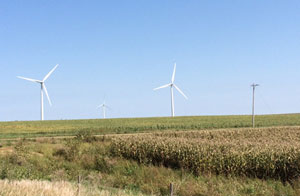 Farmers and landowners generally focus on the land beneath their feet. However, with the increasing amount of wind energy development across the Midwest, many are starting to look at the wind above their heads. There are several wind energy farms across Nebraska and they continue to expand in may rural areas. While increasing alternative energy source options is a good goal, farmers and landowners must exercise caution before entering into any lease agreement should a wind farm company approach them about constructing a wind tower on their land.
 As we head into the final stretch of August, farmers are already looking ahead to harvest. While they focus on putting pivots to rest in the near future and begin pulling out the harvest equipment, it’s a good idea for farmers and landowners in rental agreements to remember that September 1st marks the date by which lease agreements must be terminated or terms and conditions changed, if it is so desired by either party.
 Among the many decisions farmers and landowners make, the most important deal with estate planning. Unfortunately, estate planning often gets pushed to the back burner, and the wide array of options available to landowners is left unexplored. Being proactive in exploring these options can pave the way for a peaceful estate settlement that retains and passes on the assets in a mutually satisfying way for all involved parties.